
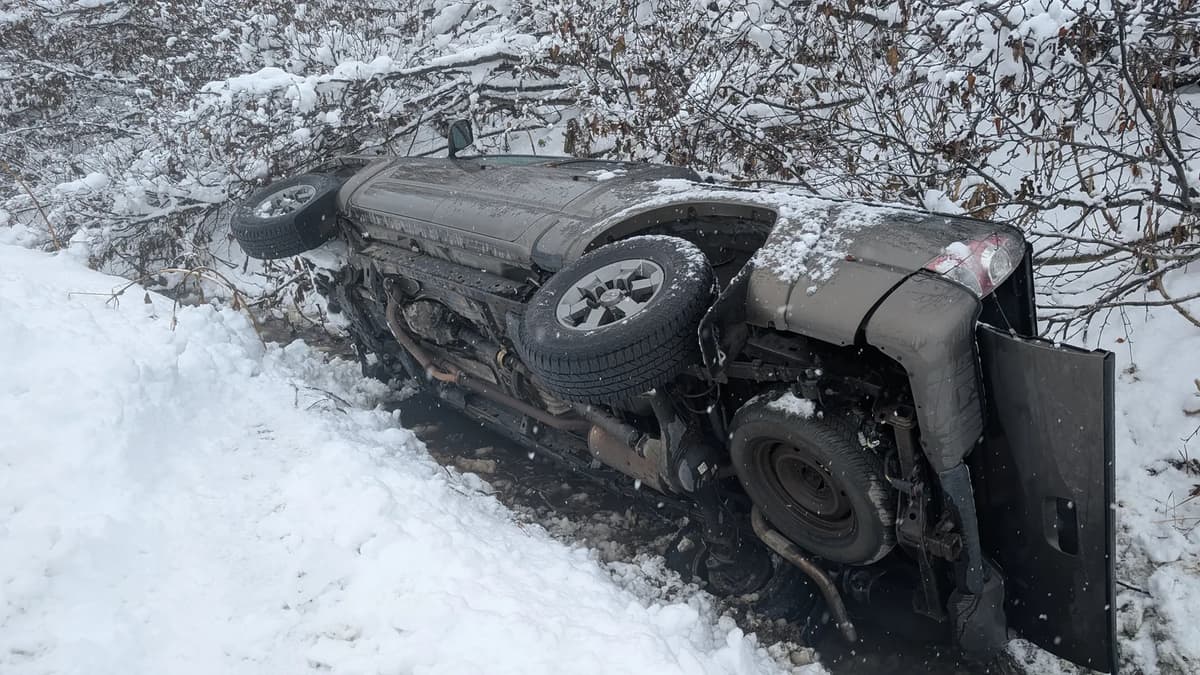
Illustrative winter recovery photo. Slide-offs on steep mountain roads need a careful recovery plan.
Hatcher Pass is one of the most popular drives in the Mat-Su, whether you are visiting Independence Mine, hiking, skiing, or enjoying the view. It is also a mountain road with steep grades, gravel sections, narrow shoulders, and weather that can turn quickly. Alaska State Parks describes the gravel stretch from Mile 17.5 to 32.5 as rough, narrow, and steep, and it is not maintained or open in winter. The summit is generally open from about July through mid-September, depending on snow. Parks also does not recommend the road for RVs and large vehicles, and it recommends four-wheel drive in winter, so check current information before you go.
Getting help can also take longer here than in town, and cell coverage is not dependable. Here is how to plan for that and what to do if you end up in the ditch.
Before you head up
- Check the weather and Alaska 511 for road conditions and closures.
- Fill up in Palmer or Wasilla, and do not count on finding fuel on the pass.
- Bring warm layers, even in summer, along with water and a flashlight.
- Tell someone where you are going and when you expect to be back.
- Check your spare tire, jack, and tire condition, especially for gravel sections.
- Consider downloading an offline map before you lose service.
Driving habits that prevent slide-offs
Most trouble on mountain roads starts with too much speed for the surface. Slow down before curves, not during them, and use a lower gear on long descents so you do not overheat your brakes. Early and late in the season, shaded corners may stay icy long after the sunny sections have dried.
Stay out of soft shoulder material when you pull over. Gravel and snow at the road edge can give way under a wheel, and what looks like a wide shoulder may be loose fill. Use established pullouts and parking areas whenever you stop for photos.
If you slide off
Check for injuries first, and call 911 if anyone is hurt or if your vehicle is at risk of moving farther. If the vehicle is tilted or sitting on a slope, get out only on the uphill side and only if it is safe. Do not climb around on a vehicle that may shift, and do not stand below it. Stay visible and away from the road, because other drivers may slide at the same spot.
Do not try to drive out if the vehicle is tilted steeply. Power can make it slide or roll. Wait for a recovery operator who can control the pull with a winch and make a plan for the slope.
Sharing your location without much signal
If you have a bar of service, send a text with a pin before anything else. If not, note landmarks such as the nearest parking area, trailhead, or bridge, along with your distance from them. You may need to walk to find a signal. Only do so if it is safe, and let anyone staying behind know the plan and when you will return.
Photos help us judge whether a truck can do the job. Include the angle of the vehicle, how far it sits below the road, and the road surface above it. A narrow section may limit where a truck can set up, and a steep or inaccessible position may need specialized help. Those recoveries are reviewed case by case and may be handled by a trusted recovery partner.
Waiting safely
Mountain temperatures can drop fast even in summer. Stay dry and sheltered, and if you run the engine for heat, make sure the exhaust outlet is clear and the vehicle is stable. Save your phone battery between check-ins. If you told someone your plan before you left, update them when you can, so they know when to worry and where to send help.
A note on timing
Daylight shortens quickly in the fall, and recovery on a narrow road is harder in the dark. If you run into trouble late in the day, call early rather than waiting.