
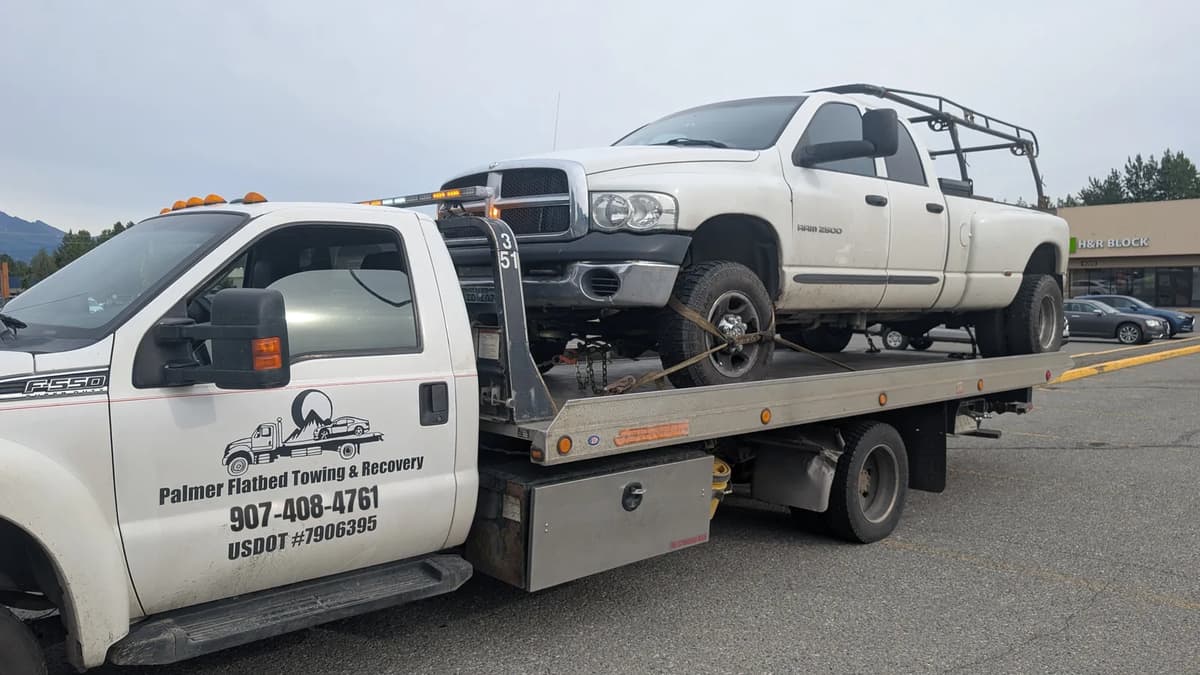
Pulling into a parking lot at the first warning sign gives you a safe place to wait and an easy load.
People tend to think of Alaska vehicle trouble as a winter issue, but summer brings its own. Long climbs, heavy trailers, slow construction zones, and fully loaded campers all ask more of a cooling system. Older coolant, a tired water pump, or a small leak may not show up until a warm day on a long grade.
The important thing is to act early. Driving even a short way with an overheated engine can turn a modest repair into a very expensive one.
The warning signs
- The temperature gauge climbing above its normal position or a warning light coming on.
- Steam or white vapor coming from under the hood.
- A sweet smell, which can point to leaking coolant.
- A loss of power, or the vehicle going into a reduced-power mode.
- A message telling you to stop the engine.
What to do in the first minute
Turn off the air conditioning right away, since it adds load to the engine. If the gauge keeps climbing and the road is clear, turning the heater to full can pull a bit of heat out of the engine. It is uncomfortable, but it may buy you time to reach a safe place. Ease off the throttle and look for a turnout or lot.
Once you are safely stopped, turn the engine off. Put on your hazard lights. If you see flames or smoke, or smell burning, move everyone well away from the vehicle and call 911.
Do not open a hot radiator
A cooling system runs under pressure. Opening a radiator cap or coolant reservoir on a hot engine can spray scalding liquid. Wait until the engine has cooled completely, which can take well over half an hour. Even then, open the cap slowly with a thick rag, and follow your owner's manual.
If the coolant is low and you have the correct mix, you can top it up once the engine is cool. Plain water can get you to a nearby shop in an emergency, but mention it to the mechanic. A big leak, coolant on the ground, or a level that drops again means the vehicle should not keep driving.
When to stop driving and call for a tow
Get a tow if the temperature rises again soon after you restart, if you see a heavy leak, if a belt has broken, or if the engine runs rough or knocks. Oil that looks milky, or heavy white exhaust, may be signs of internal damage, and running the engine can make that worse.
If you are unsure, the cost of a tow is usually less than the cost of a damaged engine. When you call, tell us what happened, where you are, whether the vehicle is on firm ground, and whether it will shift into neutral. Have a destination in mind and check that the shop is open.
Preventing it next time
Before a long summer trip, have your coolant level, hoses, belts, and radiator checked. Bugs and road debris can block the airflow through a radiator, so have it cleaned if you drive gravel roads often. If you tow, stay within your vehicle's rated capacity and use a lower gear on long grades rather than letting the transmission hunt.
Watch the gauge on climbs and in slow traffic. Knowing where the needle normally sits makes it easier to notice small changes before they grow into a roadside problem.
Hauling or towing when it happens
If you are pulling a trailer, mention its size and weight when you call. A failed tow vehicle leaves the trailer to deal with as well, and the two may need separate plans. Chock the trailer's wheels before anyone works around the hitch.
Related information
- Highway towing and recovery
- Tow to home or to the mechanic?
- Request a tow
- Sutton towing
- Willow towing