
Keeping the engine off until a mechanic has looked at it is the safest choice after water exposure.
Alaska's rivers, gravel bars, and flooded roads can catch a driver off guard, and water can be deeper or faster than it looks. If you are in moving or rising water, your safety comes first and the vehicle comes second. Get out if you can do so safely, move to high ground, and call 911.
Once everyone is safe, the most useful thing you can do for the vehicle is often the hardest: resist the urge to try starting it.
Why starting it can make things worse
If water reaches an engine's air intake, it can enter the cylinders. Water does not compress the way air does, so cranking can bend internal parts and turn a recoverable situation into a destroyed engine. This is known as hydrolock. A single try with the key can do the damage.
Water can also reach fuel, oil, transmission fluid, and electrical connectors. Modern vehicles have many control modules and connections, and water in the wrong place can short them out, sometimes well after the event. Leave the ignition off, and let a mechanic inspect the vehicle first.
Never enter moving water for a vehicle
Moving water can knock a person off their feet at surprisingly shallow depths, and cold water can quickly sap your strength and coordination. Do not wade out to retrieve belongings or attach a strap. Do not let a helper's vehicle follow you in, either. A vehicle that seems stable can shift, particularly if the river bottom is soft or the water is rising.
Tell authorities if a vehicle is leaking fuel into a waterway or is at risk of being swept downstream. Ask them about any reporting you may need to do. Take photos from a safe location, including one that shows water levels against the vehicle.
What to tell a recovery operator
- How deep the water is on the vehicle, and whether it reached the seats or the hood.
- Whether the water is moving, and whether it is rising or falling.
- How far the vehicle is from firm ground the truck could safely use.
- Whether it is a hybrid or an electric vehicle.
- Whether the keys are available and the vehicle can be shifted into neutral.
- Whether anything is leaking.
Electric and hybrid vehicles need extra care
Treat a submerged hybrid or electric vehicle with particular caution. Stay away if you see smoke, hear hissing or popping, or smell something unusual, and call 911. High-voltage batteries that have been in water, especially salt water, can present a fire risk, even some time later. Tell the operator and the destination shop about the water exposure, and keep the vehicle away from buildings where you can.
After the recovery
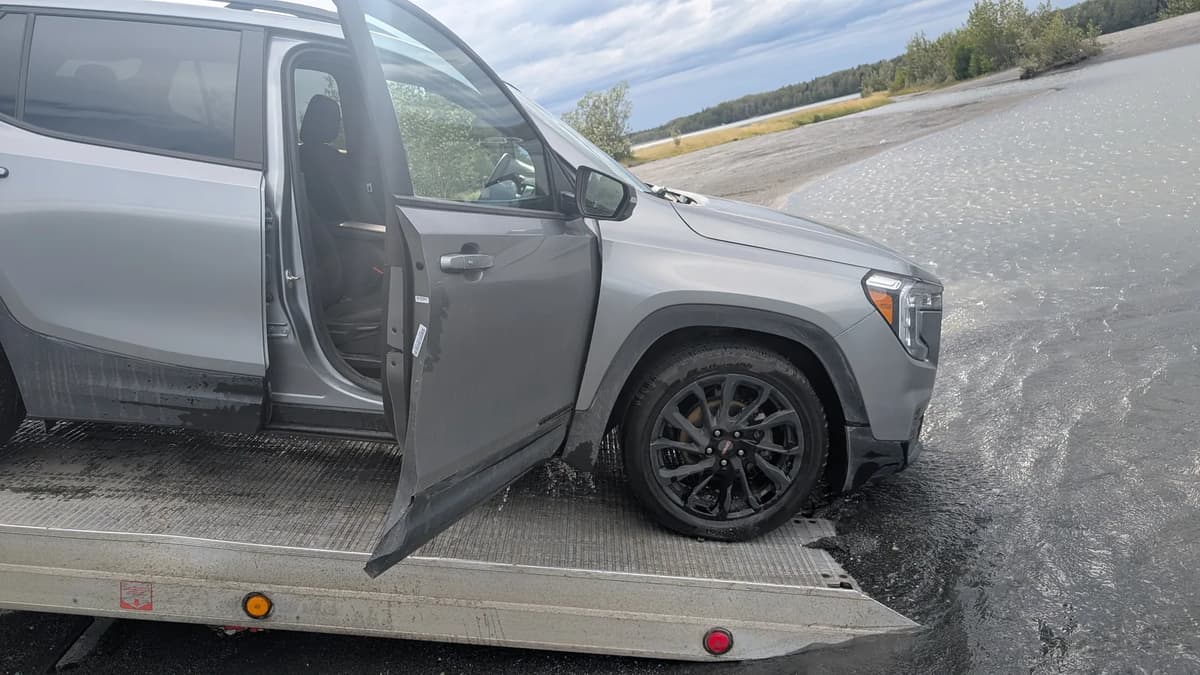
A flatbed is a sensible way to bring the vehicle in, because it does not require the engine or drivetrain to do any work. Before loading, the operator may need the vehicle to drain for a time. Remove wet items as soon as you are able, because mold can start growing within a short time.
Call your insurer early and ask how they want to proceed. Comprehensive coverage may apply, but check your policy. Tell the shop how deep the water was and how long the vehicle sat in it. They will generally check every fluid, and they may also check the wiring and brakes before saying whether the vehicle is worth repairing.
How to avoid it
Be cautious at any water crossing, and be especially careful at river access points and gravel bars, where water levels change. If you cannot see the bottom, do not assume it is shallow. Turning around is the cheapest recovery there is.
Related information
- River and mud recovery photos
- Recovery and winching
- Photos and insurance after an incident
- Sutton towing
- Willow towing