
Winter driving
Cold-Weather Car Batteries: An Alaska Guide
By Palmer Towing and Recovery · Published
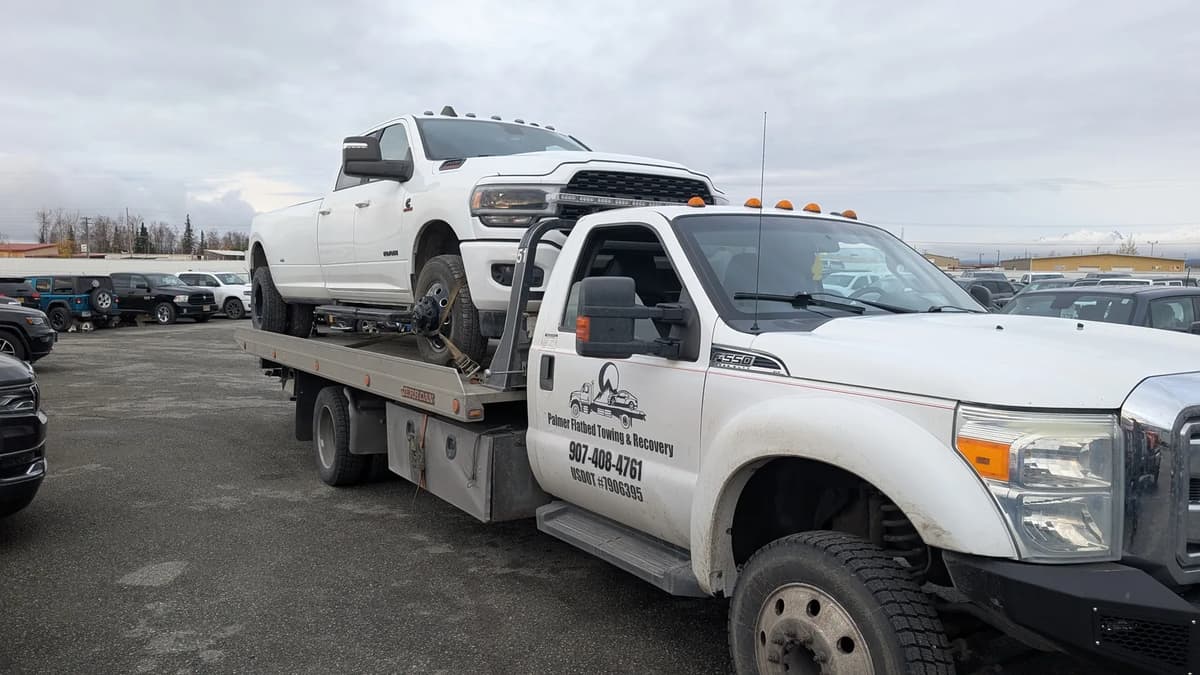
A weak battery often fails in a parking lot on the first very cold morning.
Cold weather causes a double problem for a battery. As temperatures drop, a battery's chemical reaction slows, leaving it with less power available. At the same time, thick oil makes the engine harder to turn. A battery that gave no trouble in September can give up on the first truly cold day.
Alaska owners also deal with long idle periods, short trips, and very cold nights. Here is what to watch for and how to help your battery through the winter.
Signs of a weak battery
- The engine cranks more slowly than usual, especially first thing in the morning.
- Headlights dim when the engine is idling or being started.
- Dash warning lights or electronics act oddly during a start.
- You have needed a jump recently.
- The battery case is swollen, or the terminals show corrosion.
- The battery is several years old, and you do not know its condition.
Have it tested before it fails
Many shops and parts stores can test your battery and charging system. Ask them to test the battery's cold-cranking ability, and have them check that the alternator is charging as it should. Do it in the fall, since a test takes minutes and is much easier than waiting for help on a very cold morning.
When replacing a battery, choose the correct size and a cold-cranking rating that meets or exceeds your manufacturer's specification. Many modern vehicles have particular battery types and may need electronic registration for a new one, so ask your shop about this.
What helps through the winter
Plugging in helps a lot. An engine block heater warms the engine and thins the oil, which reduces the work the battery has to do. A battery blanket or pad keeps the battery itself warmer. A maintainer or smart charger can keep a parked vehicle's battery topped up. Follow the manufacturer's instructions for each device, and regularly inspect cords for cold-weather cracking.
Short trips can be just as hard on a battery as the cold, since the alternator may not have enough time to replace what the start used up. Try to take a longer drive now and then. Turn off accessories like seat heaters, the rear defroster, and the blower before you shut down, so they do not draw power during your next start.
If it will not crank
Avoid long, repeated cranking, which strains the starter and uses up what charge is left. Wait a minute or so between short attempts. If nothing changes after a few tries, stop. Inspect the battery first if you can get to it. Do not jump a battery that is cracked, leaking, or swollen, or one you suspect has frozen. A frozen battery can be dangerous when charged or jumped, so it should be allowed to thaw and checked before it is used.
Our jump-start service is limited to vehicles we can reach safely from the road. If the jump does not work, or the vehicle dies again soon after, the battery or charging system may need repair. In that case, a tow to a shop or home is usually the next step.
Stay safe while you wait
A dead battery on a very cold day can be a safety issue, as well as an inconvenience. Keep warm clothes and a charged phone with you during the winter. Keep your power bank warm too, because cold can reduce its capacity. If you are stranded away from a building, tell someone where you are, and wait in a sheltered place when it is safe to do so.
Keep a simple record
Write the install date on the battery or in your phone. Knowing its age makes it easier to replace a tired battery before it strands you on a cold morning.