
Roadside safety
Flat Tire With No Usable Spare: Your Options
By Palmer Towing and Recovery · Published
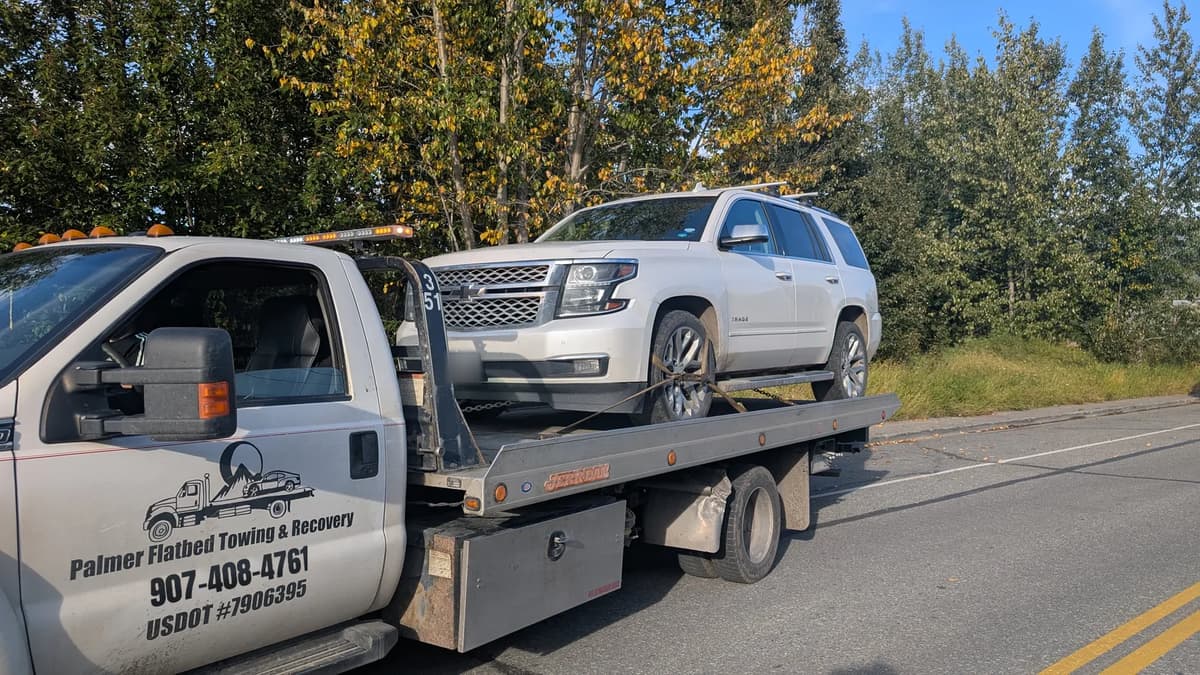
When a tire cannot be repaired at the roadside, a flatbed keeps the damaged wheel off the road.
A flat tire is a small problem right up until you find out the spare is missing, flat, or stuck under the vehicle. Many newer cars ship with a sealant kit rather than a spare, and spares stored underneath can rust in place after a few Alaska winters.
We do not offer tire changes, but we can tow a vehicle to a tire shop or home if it can be loaded safely. Here is how to think through your options and what to avoid.
Get off the road first
When a tire fails, ease off the throttle, hold the wheel steady, and let the vehicle slow on its own before gently braking. If you can reach a lot or wide turnout at low speed, it is worth a short slow roll, because a safe spot matters more than a slightly more damaged tire. Turn on your hazards. Avoid stopping on a soft shoulder, where a jack will sink and a truck may have trouble lining up.
If you have to stop next to traffic, consider whether changing the tire is safe at all. Standing on the traffic side of a vehicle on a fast highway is one of the most dangerous things you can do at the roadside. A tow is a reasonable choice even if you have a good spare.
Options if you have no spare
- Sealant kit or plug: may work for a small tread puncture, but not a sidewall cut or blowout.
- Portable compressor: may get a slow leak to a nearby shop, if the tire holds air.
- Your insurance or roadside plan: check whether it includes tire service.
- A friend with a spare wheel: it must match your bolt pattern, size, and load rating.
- A flatbed tow: best if the tire is destroyed, the wheel is damaged, or you are far from help.
Do not drive on the rim
Driving more than a very short distance on a flat will destroy the tire, and it can damage the wheel, brake parts, suspension, and fender liner. Tire pressure monitors and all-wheel-drive systems may also be affected. On AWD vehicles, a mismatched or temporary tire can strain the drivetrain, so check your owner's manual for limits on temporary spares.
A flatbed is a good fit in this case because the damaged wheel rides on the deck. Tell us which wheel is flat and whether it will still roll. A wheel that is badly damaged or locked may need extra care while loading.
Choosing a destination
Call the tire shop before you ask for a tow, if you have a signal. Confirm they are open, they have or can get your size, and they can take the vehicle. Tires for less common sizes may need to be ordered, particularly away from larger towns. If it is after hours, home may be the better destination, with a plan for the next day.
Tell us about locking wheel nuts and where you keep the key for them, since the shop will need it. Keep the damaged tire's size handy too. It is printed on the sidewall and on a sticker inside the driver's door.
Check your spare before you need it
Find out now whether your vehicle has a spare and where it is kept. Check its air pressure, as spares lose air over time. If yours mounts underneath, ask a shop to lower it and clean the mechanism during your next service, so it will not be seized on the day you need it. Keep a pair of gloves, a flashlight, and a small piece of board in your kit, to give your jack a firm base on soft ground.
Related information
- Towing FAQ
- Car towing
- Request a tow to a tire shop
- Highway Towing and Recovery
- Chugiak towing
- Eagle River towing