
Roadside safety
Disabled Truck With a Fifth-Wheel Trailer Attached
By Palmer Towing and Recovery · Published
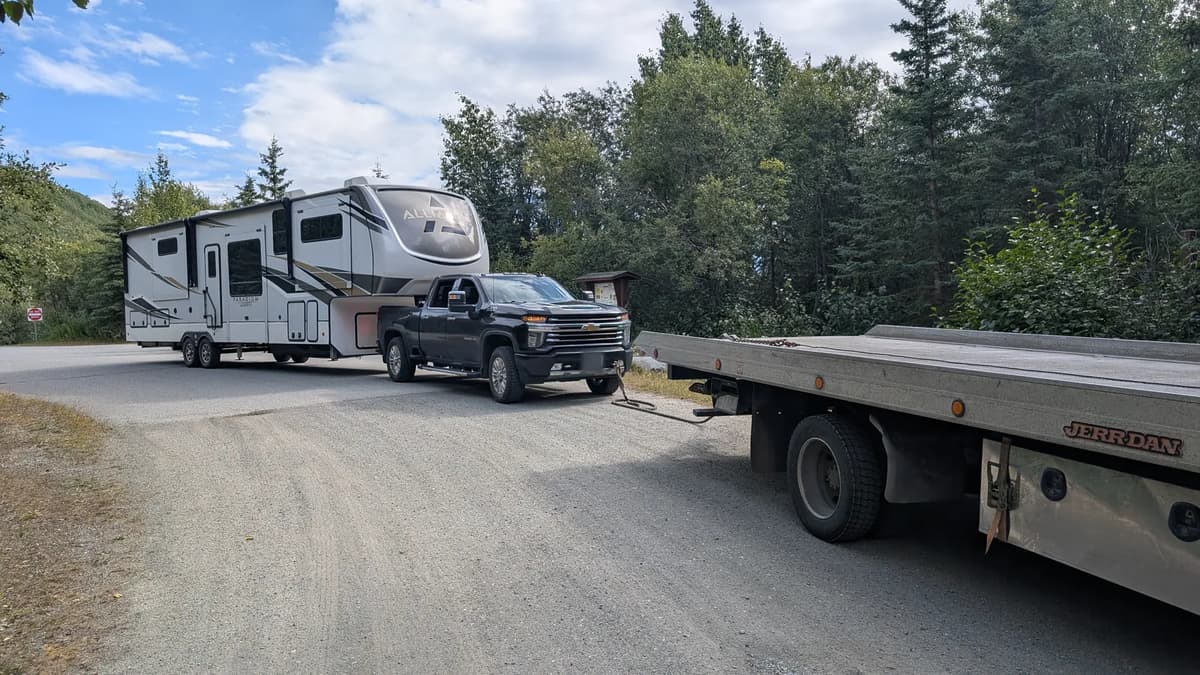
A disabled pickup and a long fifth-wheel trailer take up a lot of road and need a plan for both.
A fifth-wheel trailer can be your home on the road, which makes a truck failure especially stressful. You have a disabled pickup, a long and heavy trailer, and usually nowhere easy to leave either one. Roadside choices can be limited, especially at the height of the summer travel season.
The answer depends on the size of the trailer and where you are. Here is how to think through your options, and what information helps anyone who might be able to help you.
First, make the scene safe
A long rig on a shoulder can stick out into traffic. If the truck still has any momentum, try to reach a wide turnout, a campground, or a large lot. Turn on your hazards and set out reflective triangles if you can do it without walking in traffic. Call 911 first if the rig blocks a lane or if there is any immediate danger.
Before anyone works near the hitch, chock the trailer wheels and set the truck's parking brake if it works. The rig's weight can shift on any slope, and a trailer that rolls after it has been uncoupled is extremely dangerous. If you are not sure the ground will hold the landing gear, do not unhitch.
Your main options
- Repair on site: a mobile mechanic may be possible if the failure is minor.
- Move the truck and leave the trailer: possible if the trailer can legally and safely stay where it is.
- Bring in a second truck: a friend or hauler with a rated fifth-wheel hitch can take the trailer.
- Heavy-duty towing: large rigs may need equipment designed to handle the combined weight.
- Move it together: in some cases, an operator can help a short distance to a safer spot.
Why trailer size changes the answer
Fifth-wheel trailers vary greatly in length and weight, and a large one can weigh more than the truck pulling it. A light-duty flatbed is not designed to carry that kind of load. We can often move the pickup, but the trailer may need a separate plan and a suitably rated hauler. If a job is more than our equipment can safely handle, we will tell you so that you can call the right company quickly.
Find the trailer's GVWR on its data plate and know its overall length. Do the same for the truck. Note what failed and whether the truck rolls, steers, or shifts into neutral. The hitch type matters too, since a second truck needs a compatible hitch and the right bed clearance.
Staying put for a while
If you may be waiting a long time, consider what you need from the trailer. Bring medication, documents, food, water, and pet supplies within easy reach. If the trailer is near traffic or at risk of being hit, do not stay inside it. Parked on an approved site, it may be a comfortable place to wait, but first ask the land manager or campground how long it can stay.
If you leave the trailer behind, lock it, take your valuables, and photograph its location and condition. Check with the property owner and your insurer about how long it may stay there. Note the GPS pin so anyone hauling it later can find it easily.
What to send
Send photos of the whole rig and the area around it, including the road surface and any overhead obstacles. Add the truck and trailer details, your location, and where you would like each vehicle to go. With that information, we can quickly tell you what we are able to help with, and what will need a different kind of equipment.
Related information
- Fifth-wheel and camper photos
- Highway towing and recovery
- RV breakdown preparation
- Long-Distance Towing
- Sutton towing