
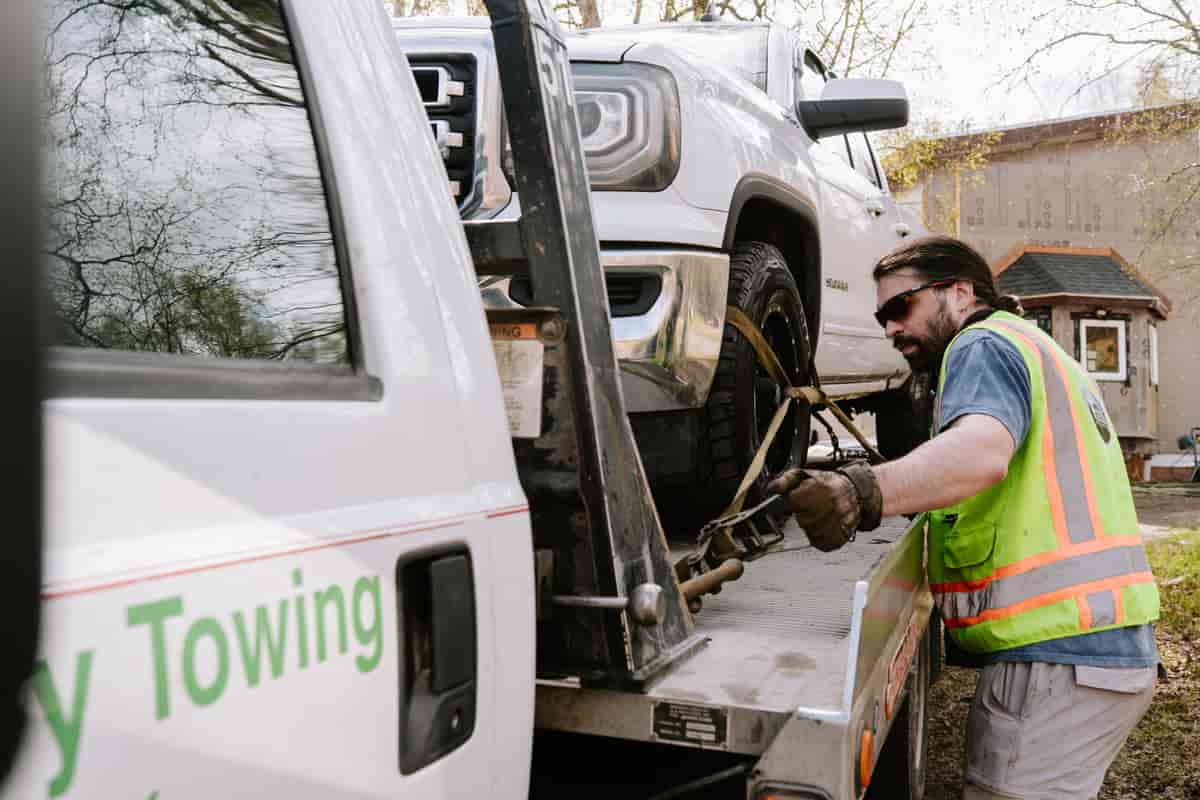
The route and the work required to load the vehicle both affect an estimate.
A useful towing estimate separates the trip from the work at the pickup. Two vehicles in the same part of the Mat-Su can have different totals when one rolls from a paved lot and the other has a locked wheel below a snowy shoulder.
Palmer Towing & Recovery publishes its current estimate structure on the pricing page. That page, not an old article or search result, is the source to use for current dollar amounts.
Start with pickup and mileage
The pickup zone accounts for getting the truck to the vehicle. Loaded mileage covers the route from pickup to destination. A local shop move, a Palmer-to-Wasilla trip, and a longer Glenn or Parks Highway run therefore should not be treated as the same job.
Send both complete locations. For a roadside pickup, include the highway, direction of travel, and a pin or mile marker. For a shop, yard, or residence, include access hours, gate instructions, and whether another vehicle blocks the loading path.
Loading condition can change the work
A vehicle that rolls, steers, selects neutral, and sits on firm level ground is different from one with collision damage, locked wheels, missing keys, very low clearance, or a failed suspension component. These are not small details: they can change how the vehicle reaches the deck and how long a controlled load takes.
Send the year, make, model, drivetrain, operating condition, and photographs before confirmation. If the vehicle is off pavement, show the entire approach as well as the tires and underbody position.
Recovery and towing are separate parts of some calls
A tow transports the vehicle. A recovery first brings it from a snowbank, soft shoulder, shallow ditch, or other accessible position to ground where it can be loaded. When both are needed, recovery work and transport mileage are estimated separately.
Do not describe a ditch call as an ordinary tow to get a lower initial number. Accurate photos and position details help prevent the wrong truck placement or an estimate that changes when the scene is visible.
Compare estimates on the same facts
A single advertised number is not a complete comparison when it leaves out the distance or work that applies to the actual call. Get the scope in writing and confirm it before the truck is sent.
- Ask whether the estimate includes the pickup zone and loaded mileage.
- Confirm whether loading or recovery time is expected.
- Give every company the same pickup, destination, vehicle condition, and access information.
- Ask how a route, condition, or scope change will be handled before dispatch.