
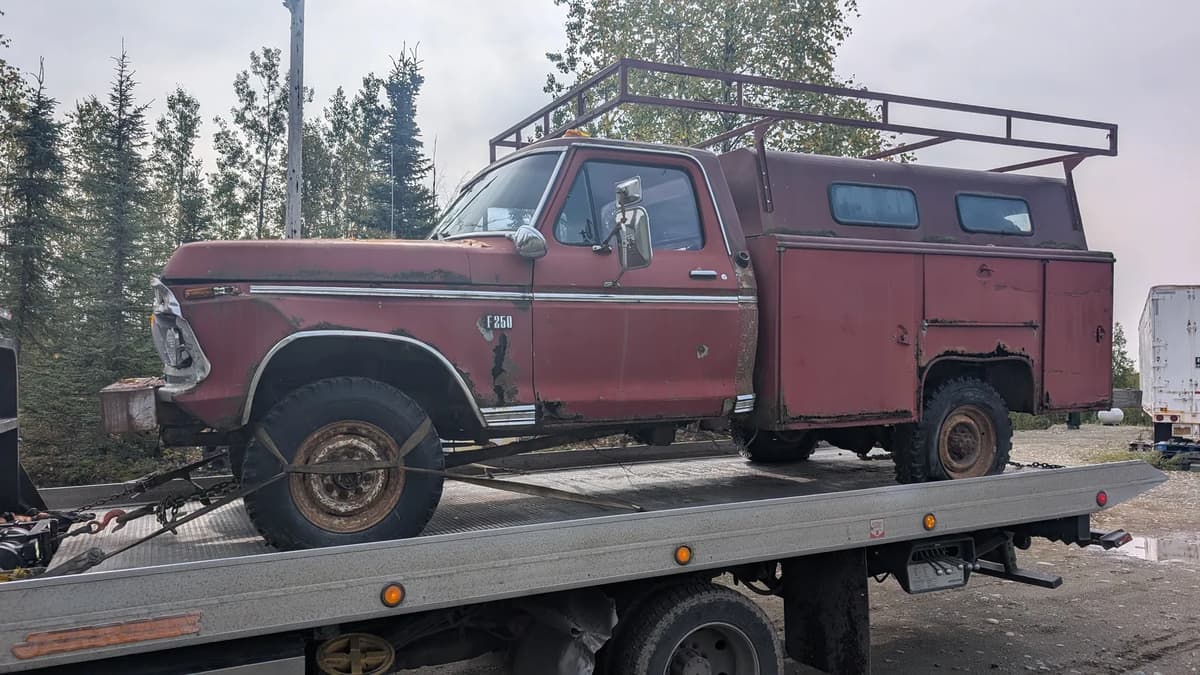
A long-haul delivery depends on secure tie-downs and a plan for both ends of the trip.
Alaska distances can surprise people. A vehicle may need to travel a long way to reach the right shop, a buyer, or a new home, and there are not many alternate routes if the road is closed. A long tow is a scheduled move, and it works best when treated like one.
If you are stranded on a highway shoulder right now, call or text rather than planning from this guide. For a planned move from a safe location, here is what helps us give you a useful estimate.
Start with both ends of the trip
Send complete pickup and delivery addresses, not just town names. Rural properties may have shared drives, unmarked turns, or locked gates, and a pin is often more useful than a street address. Include a contact name and phone number for each end, particularly if neither is you.
Describe how a truck will get in and out. Tell us about steep driveways, soft ground, low branches, power lines, or tight turnarounds. A flatbed needs room to line up and tilt its deck, and finding a problem on arrival after a long drive is costly for everyone.
What shapes the estimate
Longer hauls are quoted from our standard mileage rate, plus pickup and any loading time. A Palmer or Wasilla to Anchorage trip may qualify for a flat rate when both ends fit. Longer runs along the Glenn Highway toward Sutton, Glacier View, and Glennallen are estimate-only because conditions change the clock. See the pricing page for current rates.
Vehicle condition matters as well. A running, rolling vehicle loads quickly. A locked wheel, flat tires, or missing keys can add time at the start of a long day. Be upfront about these, and include any second stops for keys, paperwork, or parts before the estimate is confirmed.
Checklist before the truck rolls
- Keys are available, including any wheel-lock key.
- The fuel level is low but sufficient for loading, and the vehicle is free of loose items.
- Photos of all sides are taken and saved for your records.
- Destination hours and an appointment window are confirmed.
- Someone with authority is available to release and receive the vehicle.
- Registration and purchase paperwork, if needed, is available at the right end.
Allowing for weather and road work
Alaska summer means construction delays, and winter brings closures, ice, and avalanche control on some routes. Check Alaska 511 close to your travel date. A flexible delivery window helps, since safety may mean waiting for a storm to pass or a road to open. If your shop or buyer has a hard deadline, tell us when you request an estimate, so we can answer honestly about whether it can be met.
Long trips also take time for the truck to come home. That is one reason long-distance jobs are scheduled ahead when possible, rather than being treated as same-hour dispatches.
On delivery day
Tell the receiver when to expect the truck, and ask them to clear a spot with room for the deck to tilt. Have them check the vehicle against your photos when it comes off. If a shop is closed on arrival, confirm in advance where keys go and where the vehicle may safely be left. Written permission for an after-hours drop can avoid a difficult phone call later.
Comparing the cost with other options
For an older vehicle, compare the cost of the haul with what the vehicle is worth, or with having it repaired closer to where it sits. A local shop can sometimes do the work and spare you the trip. If you are selling a vehicle, ask the buyer who pays for transport before a truck is scheduled.