
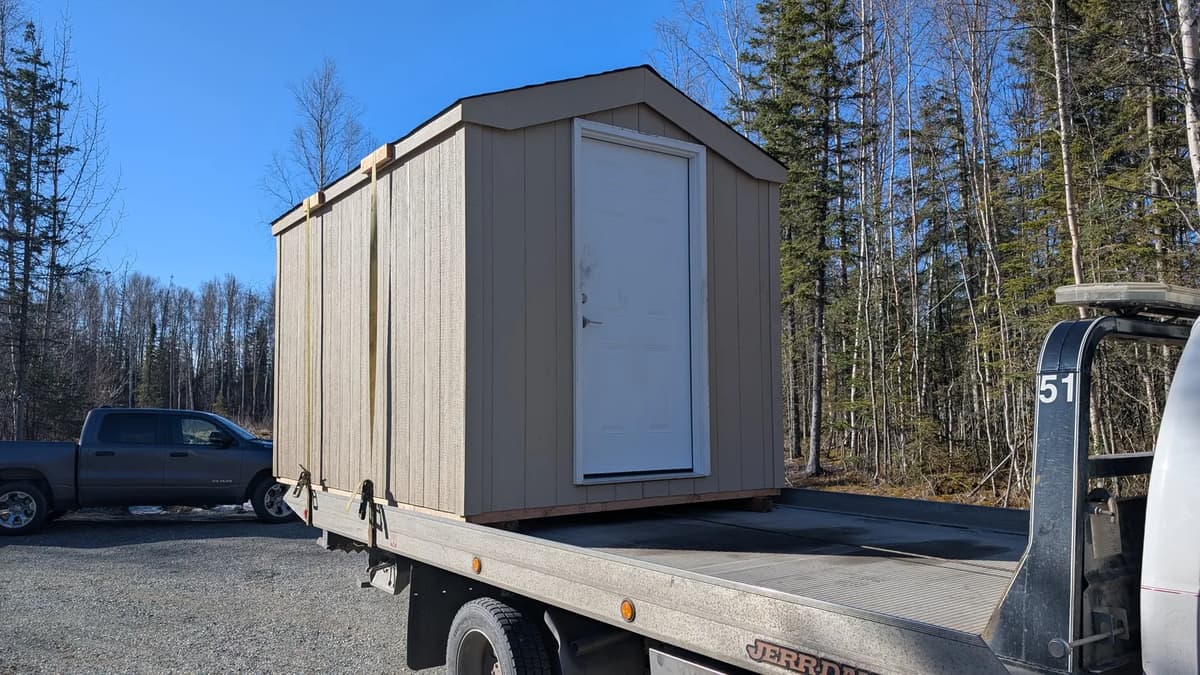
A shed needs a stable base, secure straps, and a clear path to its final spot.
A shed looks simple until you have to get it down a winding driveway and set it where you want it. The truck needs room, the ground needs to hold the weight, and the building needs to hold together while it moves.
We approve shed moves manually after reviewing the details, and the rough limits are about 20 feet long and 10 feet wide. Those numbers are not a promise. Use this guide to find out early whether your site is ready.
Measure the shed and the route
Measure the shed's length, width, and height, including roof overhangs and trim. Then measure your route. Your narrowest gate, the tightest turn, and the lowest branch or wire set the limits. Remember the shed sits on top of the deck, so its loaded height is much greater than its height on the ground.
Walk the path from the road to the final spot. Look at slopes, ditches, culverts, and side hills. A shed riding high on a flatbed can lean noticeably on uneven ground, so a sideways slope that is no problem for a pickup can be a problem here.
Check the ground
A loaded truck is heavy, and soft ground can stop a job. Spring breakup and long rainy spells are the most challenging times. Septic systems and buried lines also deserve attention, because a truck should not cross them. If you are unsure where they are, find out before delivery day.
If the driveway is marginal, consider waiting for dry weather or adding gravel well ahead of time. Tell us honestly how the ground has been behaving. Getting the truck stuck would delay your delivery and add recovery costs.
Prepare the final spot
- Build and level the pad before delivery day, using blocks, gravel, or the foundation you have chosen.
- Clear brush, stumps, snow, and stored items around the site.
- Allow working room at the truck end so the deck can tilt and pull away.
- Check local rules or covenants on setbacks and permits before setting the location.
- Decide which way the door should face and mark the corners with stakes.
Think about shed condition
Used sheds are accepted when they can be lifted and tied without coming apart. Rotten skids, a sagging floor, or loose walls can stop the job, since the structure has to survive the lift, the tilt, and the road. Send clear photos of the skids and floor, along with each side. Empty the shed before moving day, and tie the doors closed. Remove or secure anything loose on the roof or walls.
Tell us how it will get loaded. Some moves use a skid steer, forklift, or crane, and others may use a winch if the shed is built for it. Our booking form asks about this for a reason. Setting the shed onto its pad is often where the most care is needed, so have a plan for this as well.
Timing the delivery
Have someone present who can make decisions about placement. Keep vehicles and children away from the work area. Plan for the possibility that the operator may decide a route or spot is not safe on the day, since conditions can change. A short review of photos beforehand makes that much less likely. Connex containers have their own considerations, covered in our container access checklist.
Clearing the way with neighbors
If the route crosses a shared driveway or easement, tell your neighbors the delivery date and ask them to keep vehicles out of the way. A parked car or a closed gate can hold up the whole delivery, and a quick conversation beforehand is much easier than one with a loaded truck waiting.