
Vehicle transport
Towing a Classic Car: What Owners Should Know
By Palmer Towing and Recovery · Published
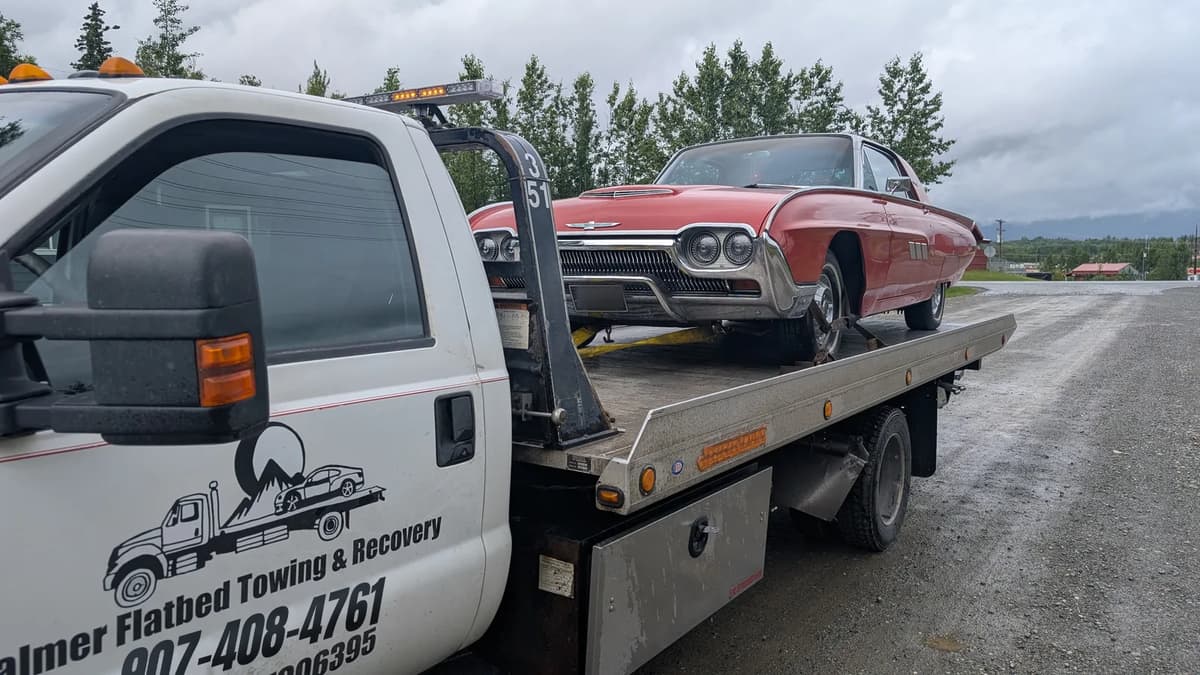
Keeping all four wheels on the deck protects an older car's drivetrain and chassis.
A classic car may be a family heirloom, a long restoration project, or a recent purchase that needs to get home. Parts can be hard to find, and even minor damage can be expensive to repair properly. That makes transport a topic worth a little extra thought.
A flatbed is generally the right method, since all four wheels ride on the deck and nothing is dragged. Here is what tends to be different about classic cars, and what you can do to help.
What makes classic cars different
Older cars tend to have less modern recovery and tie-down hardware, and decades of rust can weaken places that look solid. Chrome bumpers and thin trim are not attachment points, and they may bend under far less force than a modern bumper beam would take. Long overhangs and low exhausts can also make the loading angle a concern.
Older brakes, a weak parking brake, or a sticky shifter can make handling harder too. A car with bias-ply tires or tires that have sat for years may have flat spots or cracks. None of this usually stops the job, but all of it is useful to know before loading.
Details to share up front
- Year, make, model, and any known modifications.
- Whether it runs, rolls, steers, and stops under its own power.
- Whether the parking brake works and shifting into neutral is possible.
- Your concerns about particular trim, paint, or restored surfaces.
- Lowered suspension or a low exhaust, with a side-profile photo.
- Any fluid leaks, as an older car may drip onto the deck.
Preparing the car
Photograph the whole car, close up and in good light, along with any existing paint chips and trim damage. Secure or remove loose parts, including hubcaps, antennas, and mirrors, if they may vibrate off. Close and latch every window and convertible top if you can, and check that the hood and trunk latch firmly. Old hood latches can be a concern at highway speed.
Keep fuel low rather than full if the car is going into storage or a shop, and check for fuel smell before loading. If you know of a specific soft spot in the frame or body, point it out so the operator can stay clear of it. Show the operator any quirks, such as a hidden fuel shutoff or an unusual shift pattern.
Weather and timing
An open flatbed exposes the car to rain, dust, and gravel. If the car has fresh paint or a fragile convertible top, consider picking a dry day and a route with less gravel where you have the choice. A car cover can seem like a good idea, but a cover not designed for travel may flap and scuff the paint, so ask before using one.
Tell us about your timing at both ends. Have a garage or shop ready for the car, and make sure there is room for the truck to line up. A dry, flat place to unload is much better than a muddy or steep one, particularly with a car that has weak brakes.
Insurance and paperwork
If your car has agreed-value or collector coverage, check whether your policy has any requirements for transport. Keep your purchase paperwork and title in your possession rather than in the car. If you are buying from out of town, have the seller confirm the car's condition, keys, and release in writing before the truck is scheduled.
Buying a classic from far away
If you are buying out of town, ask for recent photos of the underside and of each tire, and ask whether it has moved under its own power lately. A car described as a runner may not have started in years, and that changes the loading plan.
Related information
- Classic and sports car photos
- Towing lowered and sports cars
- Car towing
- Flatbed Towing
- Palmer towing
- Eagle River towing