
Towing basics
Jump Start or Tow? How to Tell Which You Need
By Palmer Towing and Recovery · Published
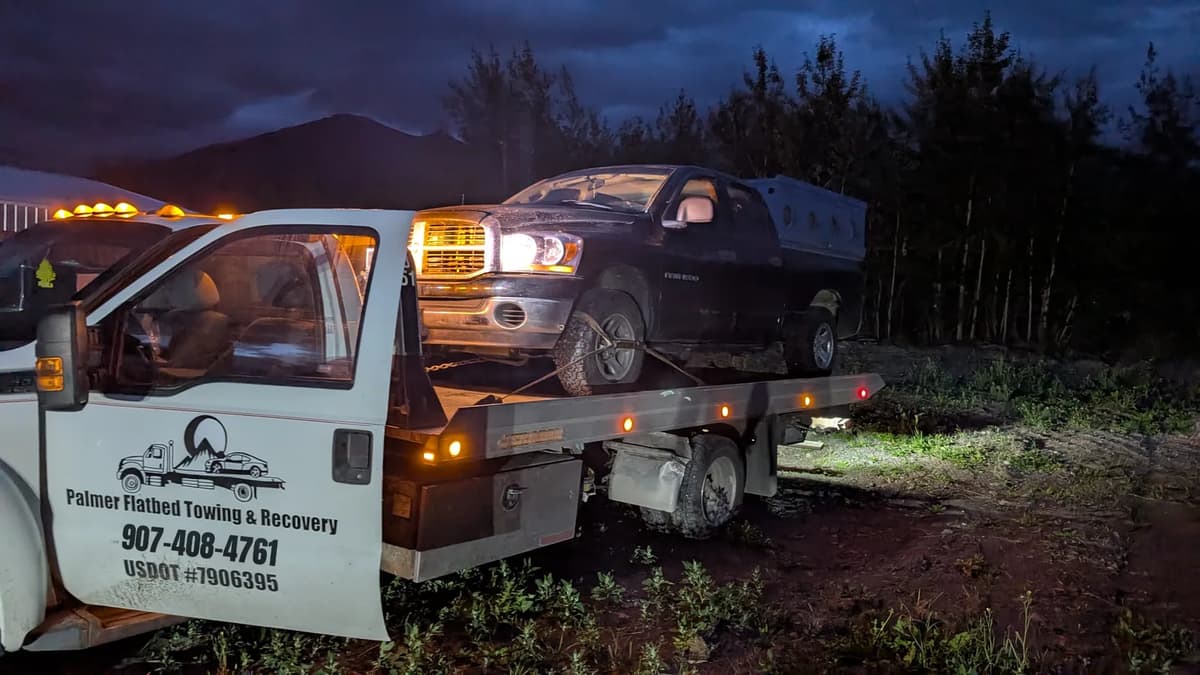
When a jump does not take, towing to a shop or home is the usual next step.
A vehicle that will not start could have a flat battery, or it could have a problem no jump will fix. Knowing the difference can save you a trip and a dispatch fee. You do not have to be a mechanic. Paying attention to what the vehicle does when you turn the key gives you most of what you need.
These signs are a general guide rather than a diagnosis. If you smell fuel or see smoke, do not keep trying to start the vehicle. Move away from it and call 911 if there is any danger.
What the symptoms may mean
- Slow, labored cranking: often a weak battery, especially in cold weather. A jump may help.
- Rapid clicking with dim lights: frequently a low battery. A jump may help.
- A single loud click: could be the starter or a poor connection. A jump may not help.
- Normal cranking but no start: more likely fuel, ignition, or sensors. A jump will not help.
- No lights or sounds at all: a dead battery or a failed connection. A jump may or may not help.
Signs that a jump is not the answer
If the battery warning light came on before the vehicle died, or if the headlights dimmed while driving, the alternator may have failed. A jump might start the engine, but it may stop again within a few miles, possibly somewhere less safe. If the vehicle needed a jump recently and is dead again, the battery may be at the end of its life, or something may be draining it.
Do not attempt a jump if the battery is cracked, leaking, swollen, or frozen. Frozen batteries can be dangerous to jump. Damaged vehicles, and vehicles that went through water, also need a closer look before anyone tries to start them. Check your manual for hybrids and EVs, since some have specific procedures or jump points.
What our jump-start service covers
Our jump starts are a limited roadside service for vehicles we can reach safely from the road. We do not diagnose electrical problems, and a successful start is not guaranteed. A dispatch fee may still apply if the vehicle does not start or cannot be reached. Rates vary by zone and begin at $125 for Palmer, and the pricing page lists the rest.
We do not offer tire changes, lockouts, or fuel delivery. If it is clear the vehicle needs to be moved, requesting a tow from the start can spare you paying for a jump attempt that does not work. Tell us about any symptoms when you call, and we can talk through which request makes more sense.
After a successful jump
Keep the engine running and drive directly to where you need to go, preferably a shop or parts store that can test the battery and charging system. Avoid shutting off the engine until you have reached a safe place, since it may not restart. Turn off unneeded accessories such as seat heaters and the rear defroster for the moment.
Short trips do not fully recharge a weak battery, particularly in the cold. If you are about to set off on a long drive on a lonely road, get it tested first. A battery that barely started the engine in town is not one you want to depend on farther out.
Parking position matters
Tell us how the vehicle is parked. If the battery sits under the hood and the vehicle is nose-in to a wall, or in a tight garage or parking structure, a truck may not be able to get close enough. A dead vehicle may also be hard to move into a better position. Photos of the parking spot and any surrounding vehicles help us decide whether a jump is practical.