
Towing basics
Pets and Passengers During a Tow: What to Plan
By Palmer Towing and Recovery · Published
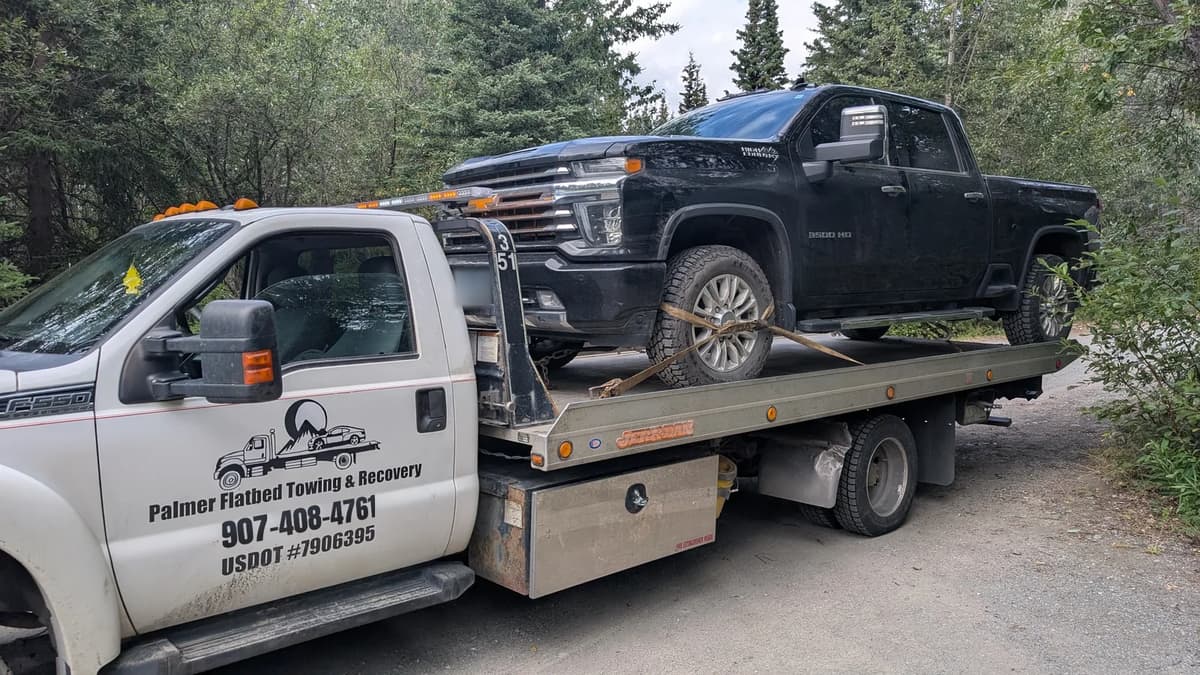
A tow truck has limited cab space, so plan rides for people and pets before the truck arrives.
When a vehicle breaks down, it often is not just the vehicle that needs to get somewhere. Children, older relatives, dogs, cats, and luggage all need a plan too. People often do not think about this until the tow truck is pulling up.
Mentioning passengers and pets when you first call helps you avoid any surprises. Here is what to think about ahead of time.
Tell us who is with you
Include the number of people, their ages, and any animals when you first contact us. Tow truck cabs have limited seats, and riding along is not guaranteed. Nobody may ride inside a vehicle on the flatbed deck during transport. It is unsafe, so anyone who cannot fit in the cab will need another way to the destination.
If you have a large group, arranging a friend, family member, or taxi service to pick up the extras may be the simplest answer. Call them early, particularly if it is late at night or you are in a remote area where a ride may take time to arrive.
Children and car seats
Child seats have to be properly installed to work, and a tow truck's cab may not suit your particular seat. Ask about it when you call, and do not assume it will work. Often the safest answer is for a family member to come with a vehicle that is already set up for the child. Bring the child's seat with you when you leave the broken-down vehicle, unless it has been in a crash, in which case check its replacement guidance.
While waiting, keep children away from traffic and away from the area where the truck will work. Keep them dressed for the weather, and bring snacks and something to keep them occupied. Waiting beside the road is hard on small children, so if a safe place is within reach, use it.
Pets on a towing call
- Keep dogs leashed, and keep cats in a carrier whenever doors are open.
- Never let an animal loose near the road, even for a minute.
- Do not leave a pet inside a vehicle being loaded or transported on the deck.
- Do not leave pets in a parked vehicle in extreme heat or cold.
- Bring water, food, medication, and vaccination records if you may be delayed.
- Tell the operator about nervous, aggressive, or very large animals.
Extra thought in winter and on long trips
If your vehicle has no heat, the wait can quickly become a safety issue for infants, older people, and pets. Share that with the dispatcher. If anyone is at risk from the cold or has a medical need, call 911. A blanket, spare gloves, and a charged phone are a good start, and our winter car kit checklist has the rest.
On a long tow, think about the time involved. A drive that takes hours may be hard on someone with medical needs, or on an animal that does not travel well. Having another vehicle follow can make the trip far easier.
What to take from the vehicle
Take anything you will need over the next few days: medication, phones and chargers, wallets, house keys, school supplies, and pet items. Vehicles at a shop may be hard to get back to, especially over a weekend. Tell the operator about things that have to stay with the vehicle, such as a spare key or a wheel-lock key.
A good plan for people and pets makes the whole call calmer. If you are unsure about what will work for your group, ask us when you call. It is an ordinary question, and we would much rather answer it before the truck arrives than at the roadside.