
Vehicle transport
ATV and Side-by-Side Transport in the Mat-Su
By Palmer Towing and Recovery · Published
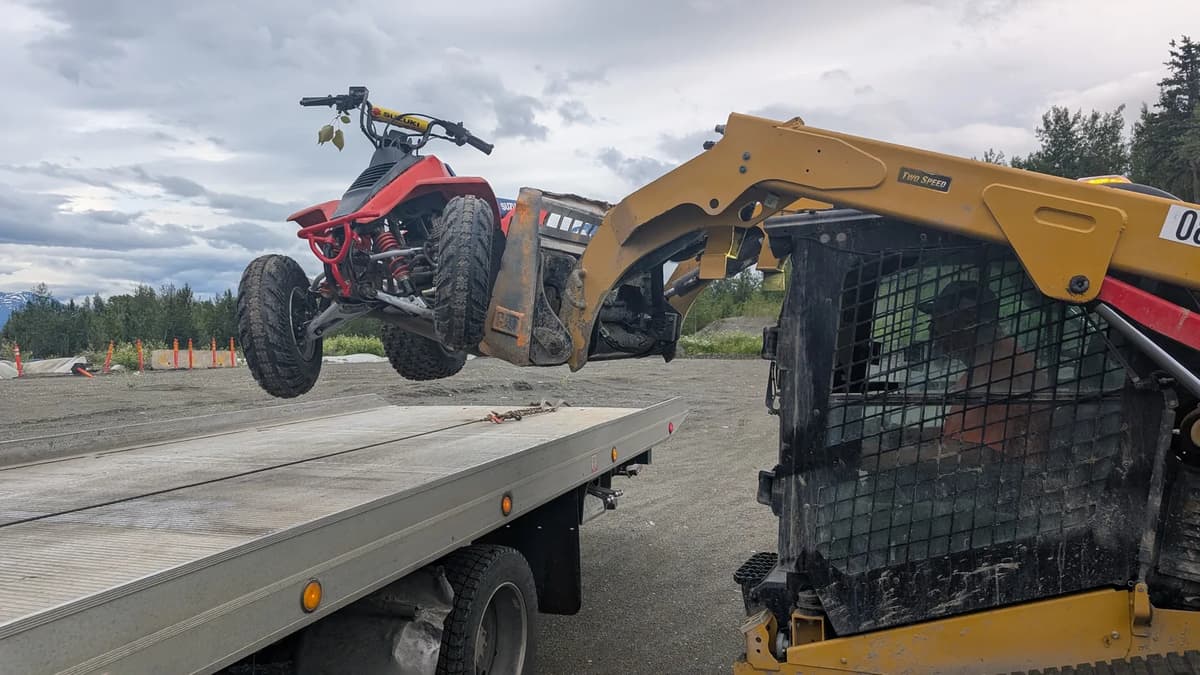
A dead machine that will not roll may need help getting onto the deck.
ATVs and side-by-sides are a big part of summer in the Mat-Su, and so are their breakdowns. A machine that quits in a driveway or trailhead lot is usually an easy flatbed job. One that stops miles down a trail is a different kind of problem.
Here is what to prepare when you need one moved, whether it is headed to a shop, a new owner, or home after a rough day.
Measure before you call
Side-by-sides can be wide and tall, particularly with cages, roof racks, oversized tires, and spare mounts. A quick measurement of overall width and length helps us confirm the machine fits the deck and leaves room for proper tie-downs.
Mention plows, winches, extra fuel, or anything else attached. Added equipment changes both the footprint and the weight. If you bought a machine at an auction or from a private seller, ask the seller about any quirks, especially whether it can be shifted into neutral.
How it gets on the deck
- Running machines can often be driven up with care if the angle is safe.
- A machine that rolls but will not run can usually be winched on.
- Locked wheels or a seized drivetrain need extra planning, and sometimes a lift.
- If you have a forklift, skid steer, or tractor on site, tell us. It may simplify loading.
- Have the key ready and show the operator how to release any parking brake.
Road pickup or trail recovery?
A tow truck is a road vehicle. It can reach driveways, gravel lots, and trailhead parking areas when the surface is firm. If the machine is on a trail where the truck cannot go, it is a recovery question first, not a simple haul.
One option is to bring the machine to a road with a second machine, using a proper strap and a slow, careful pull, if you can do it safely and within land-use rules. Another is to ask a recovery partner. Send a GPS pin, photos, and a description of the trail, and we can tell you whether the job is realistic for our equipment. Never leave people waiting at a remote site without a plan for water, warmth, and communication.
Timing and logistics
Trailhead lots can be crowded on summer weekends, leaving little room for a truck to line up and tilt the deck. If the machine can wait, a weekday or early morning pickup can be simpler. Tell us about parked vehicles or trailers that could block the approach.
If you are arranging delivery rather than dealing with a breakdown, send both addresses and confirm someone will be there with keys. Ask the seller or shop about gate hours and any required paperwork before scheduling. A second stop for keys or paperwork should be included before the estimate is confirmed.
Paperwork, fluids, and loose gear
A few small steps make transport go better. Remove coolers, loose fuel cans, fishing gear, and anything else that can bounce out at highway speed. Check that doors, nets, and roof panels are latched. Tell us about a fuel or oil leak, since it will drip on the deck and may need attention before the machine goes on. If a machine has just been bought, carry a copy of the bill of sale and any title or registration papers yourself. Take photos of the machine before loading. Width also matters on the road, so tell us about wide tires or anything added since the factory specifications were published. If you are moving a machine after a rollover, check for bent steering or suspension parts, because those can affect how it rolls onto the deck. A short video of the machine trying to roll can answer several questions at once and may save a return trip.