
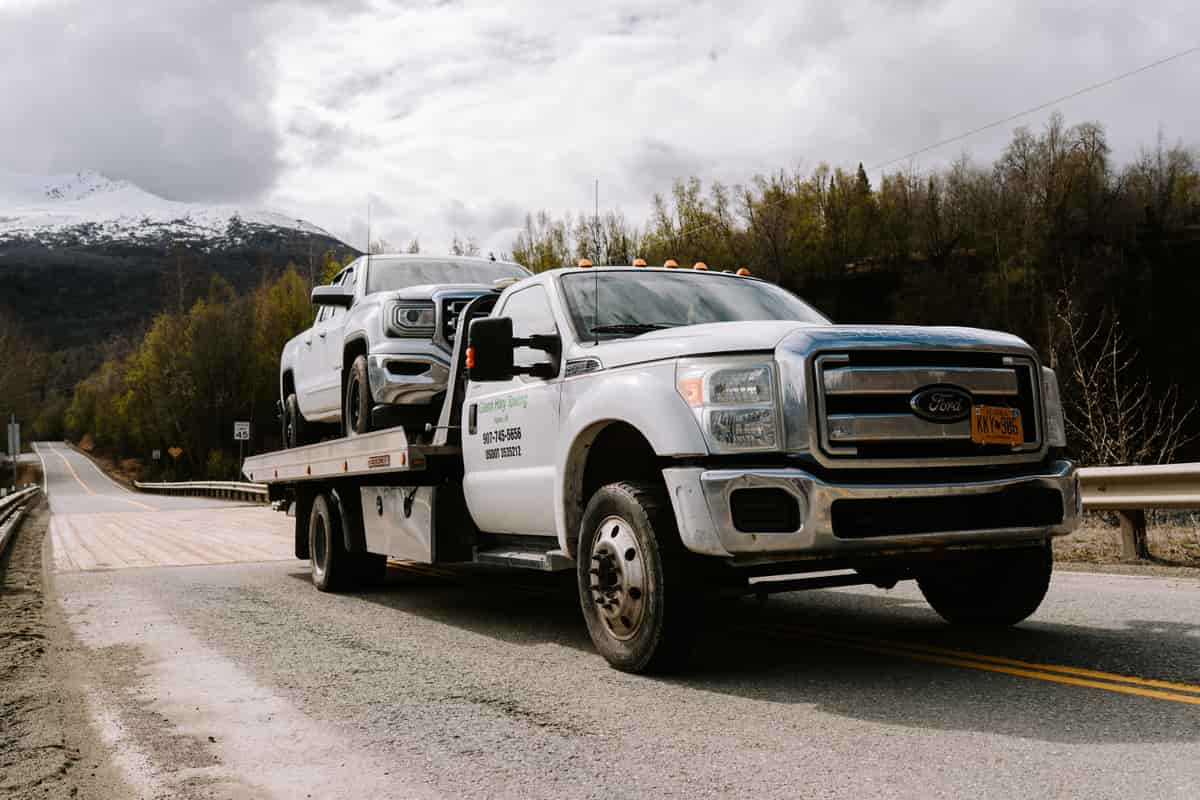
This transport image is illustrative and does not depict a moose-collision scene.
A moose collision can leave a vehicle in traffic with broken glass, leaking fluid, damaged steering, or an injured animal nearby. Treat it first as an emergency scene, not as an ordinary disabled-vehicle pickup.
The sequence below is practical preparation, not legal or insurance advice. Follow instructions from 911, law enforcement, fire personnel, or other responders at the scene.
Call for emergency help when the scene is dangerous
Call 911 when anyone may be injured, the vehicle blocks an active lane, the animal remains in or near traffic, fuel or another fluid is leaking, or the scene creates an immediate hazard. Turn on hazard lights if the electrical system still works.
Do not approach a moose, including one that appears unable to move. An injured animal can react without warning. Stay in a protected place when possible and do not stand between the vehicle, the animal, and moving traffic.
Move only when responders say it is appropriate
If the vehicle can move and authorities direct you to clear the lane, use the nearest safe shoulder or turnout. Do not drive farther merely because the engine still runs. Hidden cooling, steering, suspension, sensor, windshield, or hood-latch damage can make continued travel unsafe.
Towing arrangements should wait until the scene is released. Give the dispatcher the responder-approved pickup point, direction of travel, and any access instructions rather than asking a truck to enter an active investigation or traffic-control area.
Document the vehicle without entering traffic
When responders allow it and the position is safe, photograph the front, both sides, every wheel, broken glass, leaking areas, loose panels, and the space around the vehicle. Do not step into a lane or move debris solely to get a picture.
Tell the towing company whether the vehicle powers on, rolls, steers, shifts into neutral, and has keys. Report a folded wheel, collapsed suspension, jammed hood, hanging bumper, fluid leak, or damaged electric-vehicle battery before dispatch.
Why the loading plan may change
Collision damage can prevent a normal straight winch onto the flatbed. A locked wheel may need a loading aid; loose bodywork may need to be controlled; and a vehicle below the shoulder may require a recovery pull before transport.
Choose a destination that has agreed to receive the vehicle and provide its hours, contact name, and key instructions. Keep photographs and incident records for your own insurer, but do not assume the towing company can determine coverage or bill an insurer directly.